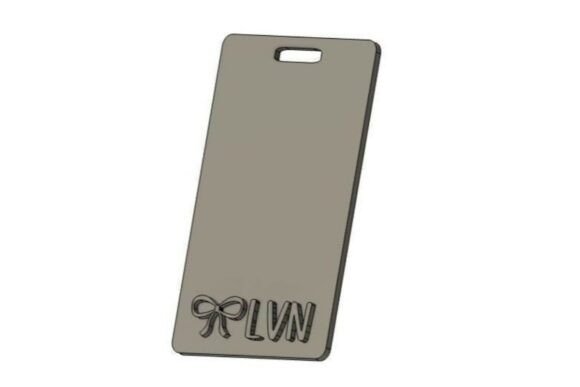
3D Bow LVN Badge Holder STL: Elevating Professional Identity for Nurses
In the fast-paced environment of modern healthcare, every detail of a professional's appearance contributes to patient trust and team efficiency. For Licensed Vocational Nurses (LVNs), the badge is not merely an identification tool; it is a constant visual signal of authority, accessibility, and care. However, standard plastic lanyards and generic clip-on holders often fail to meet the rigorous demands of daily clinical work. They can be bulky, prone to breaking, or simply lack the aesthetic appeal that many nurses seek to personalize their uniforms. This is where the 3D Bow LVN Badge Holder STL emerges as a transformative solution, merging functional durability with customizable style.
The shift toward personalized, durable, and aesthetically pleasing medical accessories reflects a broader trend in the industry: professionals are no longer settling for "one-size-fits-all" equipment. Nurses are increasingly looking for ways to express individuality while maintaining strict adherence to safety and hygiene protocols. By upgrading your badge game with this LVN Badge Buddy STL file, you gain access to a design specifically engineered for Licensed Vocational Nurses who want clear, professional, and customizable identification. It represents a move away from disposable office supplies toward high-quality, long-lasting tools designed for the realities of the hospital floor.
The Evolution of Medical Identification Accessories
Traditionally, badge holders were mass-produced commodities made from cheap plastics or vinyl. While they served the basic function of holding an ID card, they often lacked structural integrity. In a setting where badges are constantly bumped against doorframes, medical equipment, and bed rails, these standard holders frequently crack, warp, or lose their clips. The result is a cycle of replacement that is both costly and environmentally wasteful.
The advent of accessible 3D printing technology has disrupted this status quo. It allows for the creation of bespoke accessories that address specific pain points of the user. The 3D Bow LVN Badge Holder STL is a prime example of this evolution. Unlike injection-molded items that require massive production runs to be cost-effective, digital STL files enable small-batch or on-demand manufacturing. This means designs can be optimized for specific use cases—such as the vertical orientation required by certain ID cards—without the overhead of traditional manufacturing.
This technological shift empowers healthcare workers to participate in their own supply chain. Instead of waiting for hospital procurement to approve a new type of badge holder, individual nurses or departments can download a file, print the item using durable materials, and immediately improve their workflow. The ability to customize the size, color, and structural features of the badge holder ensures that the final product fits the user perfectly, rather than forcing the user to adapt to a poorly designed product.
Design Specifications and Functional Advantages
The effectiveness of any badge holder lies in its dimensions and how it interacts with the ID card itself. The 3D Bow LVN Badge Holder STL is meticulously designed with precise measurements to ensure compatibility and ease of use. Standing at a height of 4.5 inches and a width of 2.5 inches, it aligns perfectly with standard ID card dimensions. This precision is critical; a holder that is too wide can snag on clothing or equipment, while one that is too narrow may not protect the edges of the card adequately.
One of the most significant practical features of this design is its suitability for IDs where the hole is punched directly into the card. Many hospitals issue badges with pre-punched holes for security reasons, preventing the removal of the photo or information. Traditional holders often rely on sliding mechanisms or separate sleeves that can be difficult to attach to these rigid cards. The LVN Badge Buddy STL file accommodates this specific requirement, allowing the badge to slide smoothly into place and remain secure without the need for additional adhesives or complex assembly.
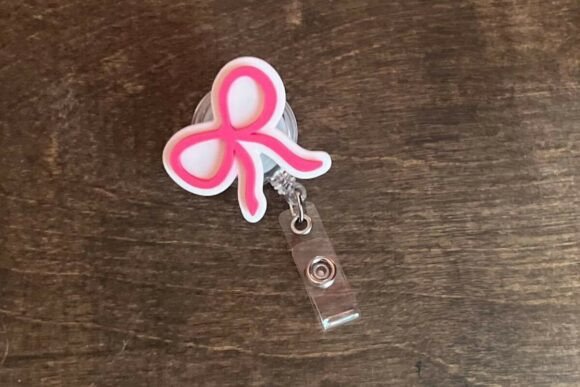
Furthermore, the vertical orientation of this LPN badge holder offers ergonomic benefits. A vertical layout often presents the nurse's name and title more legibly to patients standing at eye level, facilitating quicker introductions and building rapport. The design also incorporates a "Bow" element, which adds a touch of elegance and softness to the otherwise utilitarian look of medical gear. This subtle stylistic choice helps humanize the healthcare experience, making the nurse appear approachable and friendly without compromising professionalism.
Durability in High-Stress Environments
In the healthcare sector, equipment must withstand constant sanitization, physical impact, and prolonged wear. The Badge Mate design philosophy prioritizes a durable 3D printed construction capable of withstanding daily wear in a fast-paced healthcare setting. When printed with high-quality filaments such as PETG or ASA, the resulting object is significantly more robust than standard office plastic.
These materials offer resistance to chemicals commonly used for disinfection, ensuring that the badge holder does not degrade when wiped down with alcohol or bleach-based cleaners. Additionally, the 3D printing process allows for thicker walls and reinforced stress points, particularly around the attachment mechanism. This structural integrity means the holder is less likely to snap under tension, a common failure point for cheaper alternatives.
Despite its sturdiness, the design remains lightweight. Nurses are already carrying heavy loads, from charting devices to personal protective equipment. Adding unnecessary weight to a badge holder can contribute to neck strain over a 12-hour shift. The balance between being sturdy for long-term use and lightweight for comfort is a key differentiator of this STL file. It provides the protection needed for the ID card without adding fatigue to the wearer.
Customization and Personal Branding for Healthcare Professionals
Beyond functionality, there is a growing desire among healthcare professionals to curate their professional image. Uniforms are often standardized, leaving little room for personal expression. Accessories like badge holders become a canvas for individuality. The 3D Bow LVN Badge Holder STL offers a unique opportunity for customization that off-the-shelf products cannot match.
For those who own a 3D printer, the possibilities are endless. The STL file can be printed in any color available in filament form. A nurse might choose a calming blue to match their scrubs, a vibrant pink to show support for breast cancer awareness, or a sleek black for a minimalist aesthetic. Moreover, the file can be modified using CAD software to add text, logos, or specific symbols before printing. This level of control allows nurses to create a cohesive look that reflects their personality or their specific unit's culture.
For businesses and clinics, this customization capability translates into branding opportunities. A clinic could order a batch of these holders printed in their brand colors, creating a unified front for all staff members. This attention to detail signals to patients that the organization values quality and consistency. It transforms a mundane piece of equipment into a subtle marketing tool that reinforces the clinic's identity.
Practical Implications for Workflow and Patient Interaction
The choice of badge holder impacts more than just aesthetics; it influences daily workflow and patient interactions. A badge that is difficult to read or constantly falls out of its holder creates friction. Patients struggle to identify who is helping them, and nurses waste time adjusting their gear. The LVN Badge Buddy STL file addresses these issues by providing a secure, clear, and stable platform for identification.
When a badge is held securely and presented clearly, it facilitates smoother communication. Patients feel more comfortable asking questions when they can easily see the name and credentials of the person assisting them. This clarity fosters trust, which is the foundation of effective patient care. Furthermore, a durable holder reduces the administrative burden on nursing managers who no longer need to replace broken badge holders constantly. It streamlines the supply management process, allowing resources to be allocated to more critical needs.
From a creative perspective, the availability of such STL files encourages a culture of innovation within healthcare teams. It invites nurses to think critically about their tools and consider how small improvements can enhance their working conditions. Whether you are a solo practitioner, a department head, or a hobbyist interested in medical tech, adopting solutions like the 3D Bow LVN Badge Holder STL demonstrates a commitment to excellence and adaptability.
Adopting the Future of Medical Accessories
As the healthcare landscape continues to evolve, so too do the expectations of the professionals who work within it. The demand for high-quality, personalized, and sustainable tools is rising. The transition from generic, disposable badge holders to durable, 3D-printed custom solutions is not just a trend; it is a necessary adaptation to the modern workplace.
By choosing to upgrade your badge game with this LVN Badge Buddy STL file, you are investing in a tool that respects your profession and supports your daily tasks. It combines the precision of engineering with the warmth of personal style, offering a solution that is as practical as it is appealing. Whether you are printing it yourself or sourcing it from a local maker, the impact is the same: a clearer, more professional, and more resilient way to present yourself to the world.
In a field defined by service and care, the details matter. A well-designed badge holder ensures that your identity is always visible, your credentials are protected, and your professional image remains intact throughout the busiest shifts. It is a small change with a significant impact, proving that even the smallest accessories can play a vital role in the grander scheme of healthcare excellence.