Coquette Bow Badge Reel STL: Elevating Professional Identity with 3D Printed Charm
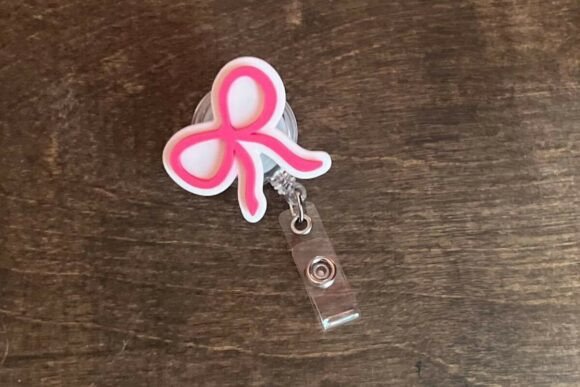
In the modern professional landscape, the boundary between functional utility and personal expression is increasingly blurred. For years, the badge reel was a purely utilitarian object—a plastic or metal mechanism designed solely to hold an identification card securely. However, as remote work gives way to hybrid models and healthcare environments prioritize patient comfort, the visual language of the workplace has evolved. Enter the Coquette Bow Badge Reel STL, a digital design file that represents more than just a printable object; it signifies a shift toward personalized, human-centric professionalism. By adding a touch of charm to your workday with this 3D Bow Badge Reel Topper STL file, professionals in healthcare, education, and beyond can transform a mundane accessory into a statement of style.
The Rise of Personalized Professional Aesthetics
The "coquette" aesthetic, characterized by softness, femininity, and delicate details like bows and ribbons, has permeated fashion and lifestyle trends significantly over the last few years. While often associated with casual wear, its influence has naturally extended into professional attire, particularly in industries where approachability is a key metric of success. Nurses, teachers, and administrative staff are finding that small touches of personality can soften the sterile atmosphere of hospitals or the rigid structure of school corridors.
This trend is not merely about decoration; it is about connection. In high-stress environments like healthcare, a friendly, non-threatening appearance can help reduce patient anxiety. A standard black plastic badge reel offers no emotional cue, but a Coquette Bow Badge Reel STL printed in pastel pink or soft lavender signals warmth and care. This aligns with broader market preferences where consumers and clients alike expect brands and individuals to show a human face. The evolution of the badge reel from a generic tool to a customizable canvas reflects a deeper cultural desire for authenticity in professional settings.
Understanding the Digital Design File
For those new to the world of additive manufacturing, understanding what an STL file entails is crucial. An STL (Stereolithography) file is a standard format used in 3D printing that defines the geometry of a three-dimensional object. When you download the Coquette Bow Badge Reel STL, you are acquiring the digital blueprint necessary to fabricate the physical topper. This democratization of manufacturing allows users to bypass traditional retail limitations, offering infinite customization possibilities that mass-produced items simply cannot match.
The specific design in question is engineered for versatility. It comes packaged as a comprehensive ZIP folder containing two distinct options to suit different printing capabilities:
- AMS Compatible Version: Designed for printers equipped with Automatic Material Systems (like Bambu Lab), this version allows for multi-color printing without manual filament changes, enabling complex color gradients or distinct sections within the bow.
- Individual Assembly Files: For users with single-extruder printers, the package includes separate STL files for each piece. These are designed to be printed individually and assembled using super glue or other adhesives, ensuring structural integrity while allowing for mixed-material creativity.
This dual-format approach demonstrates a sophisticated understanding of the user base, catering to both hobbyists with entry-level equipment and enthusiasts with advanced multi-color setups.
Technical Specifications and Practical Application
While aesthetics drive the initial interest, functionality ensures long-term adoption. The Coquette Bow Badge Reel STL is meticulously dimensioned to fit seamlessly into existing workflows. The design specifications are precise yet flexible, acknowledging that slicer software allows for minor adjustments based on specific printer tolerances or personal preference.
The top-to-bottom height measures approximately 1.72 inches, with a width of roughly 1.8 inches. These dimensions strike a balance between visibility and discretion; the bow is large enough to make a statement but compact enough to avoid snagging on door handles or medical equipment. The backplate is constructed with a thickness of 3mm, providing the necessary rigidity to withstand daily handling. Additionally, the design fits standard badge reels with a diameter of approximately 1.26 inches, ensuring compatibility with the vast majority of lanyards and retractors currently in use.
For professionals considering this upgrade, the practical implications are significant. Unlike flimsy plastic accessories found in novelty shops, a 3D printed item created with high-quality filament is robust. The design accounts for the stresses of a fast-paced environment, such as the pulling force exerted when retrieving a badge or the friction against uniforms during movement.
Customization: Matching Scrubs and Uniforms
One of the most compelling features of utilizing a digital STL file is the ability to control the final output's appearance. In fields like nursing and education, uniforms often come in specific color palettes—scrubs might be teal, navy, burgundy, or sage green. Mass-market accessories rarely offer a perfect match, forcing workers to choose between a clashing accent or a plain, invisible one.
With the Coquette Bow Badge Reel STL, the user becomes the designer. You can personalize your badge topper by printing in your favorite color or selecting a shade that perfectly coordinates with your scrubs. This level of customization extends beyond simple color matching. Advanced users can experiment with different filaments:
- PLA (Polylactic Acid): Ideal for vibrant colors and smooth surface finishes, PLA is the most common choice for decorative items. It offers a wide spectrum of hues, including matte and glossy variants.
- ABS (Acrylonitrile Butadiene Styrene): Known for its durability and heat resistance, ABS is a superior choice for items subjected to frequent sterilization or harsh environmental conditions, though it requires a more controlled printing environment.
- PETG: A middle ground offering the ease of printing associated with PLA and the toughness closer to ABS, making it an excellent all-rounder for durable badge holders.
This flexibility empowers professionals to curate their look intentionally. A teacher might print a bow in the school's colors to foster community spirit, while a nurse might choose a calming pastel to complement her role in patient care.
Durability in High-Traffic Environments
A common misconception regarding 3D printed accessories is that they are fragile novelties. However, when designed correctly and printed with appropriate materials, these items are remarkably resilient. The Badge Mate design referenced in the Coquette Bow collection is specifically engineered to withstand daily wear in a fast-paced healthcare setting. It is both lightweight, reducing strain on the neck and shoulders, and sturdy enough to endure the rigors of a twelve-hour shift.
The assembly process, whether printing as a single unit or gluing individual components, creates a solid structure. The 3mm thickness of the backing ensures that the attachment point remains secure, preventing the badge from detaching unexpectedly. For businesses and organizations looking to equip their staff with branded or uniform-compliant accessories, bulk printing these designs offers a cost-effective alternative to purchasing expensive custom-molded parts.
How to Integrate the Design into Your Workflow
Getting started with the Coquette Bow Badge Reel STL is a straightforward process that bridges the gap between digital design and physical reality. The workflow is designed to be accessible even for those with moderate technical skills.
Step 1: Download the File
Begin by instantly downloading the STL file from your chosen source. Ensure you have the correct folder structure, verifying whether you need the AMS version for multi-color printing or the individual assembly files for single-color fabrication.
Step 2: Prepare the Slicer
Import the file into your preferred slicing software (such as Cura, PrusaSlicer, or Bambu Studio). Here, you can adjust the scale if necessary, though the default dimensions are optimized for standard reels. Select your infill density; for a badge topper, a higher infill percentage (around 20-40%) is recommended to ensure the bow holds its shape under pressure without becoming unnecessarily heavy.
Step 3: Print and Assemble
Use a 3D printer with compatible filament, with PLA or ABS being the recommended choices depending on your durability needs. If you chose the assembly version, print each piece separately. Once cooled, use a strong adhesive like super glue to bond the pieces together. Allow ample curing time before attaching the reel to ensure a permanent bond.
Step 4: Attachment
Finally, slide the finished topper onto your standard badge reel. The fit is snug, designed to stay in place without slipping, ready to add flair to your uniform immediately.
Conclusion: A Small Detail with Big Impact
The integration of the Coquette Bow Badge Reel STL into professional life is more than a fleeting trend; it is a reflection of how modern workers seek to assert their identity within structured environments. Whether you are a healthcare provider aiming to create a welcoming atmosphere, an educator wanting to connect with students, or a creative professional seeking to express your unique style, this 3D printable solution offers a practical and stylish answer.
By leveraging the power of 3D printing, individuals can move away from generic, off-the-shelf solutions and embrace accessories that are tailored to their specific needs and aesthetic preferences. The result is a workspace that feels more personal, a uniform that feels more authentic, and a daily routine that is elevated by a simple, charming detail. As technology continues to lower the barriers to entry for custom manufacturing, tools like this STL file will become increasingly vital in shaping the future of professional presentation.