Small 3D Mosque Laser Cut SVG 4mm: A Comprehensive Guide to Digital Islamic Decor
The intersection of traditional craftsmanship and modern digital fabrication has given rise to a new era of decorative arts. Among the most compelling examples of this fusion is the Small 3D Mosque Laser Cut SVG 4mm. This digital design file represents more than just a pattern; it is a blueprint for creating intricate, three-dimensional architectural models that capture the spiritual essence of Islamic heritage. Designed specifically for laser cutting machines, this file allows creators to transform flat sheets of material into complex, interlocking structures with precision and ease.
As the demand for personalized, meaningful decor grows, particularly during significant religious observances like Ramadan and Eid al-Fitr, the utility of such specific digital assets becomes increasingly apparent. Unlike mass-produced items found in retail stores, designs like this offer a level of customization and tactile quality that resonates deeply with both hobbyists and professional makers. The specific requirement of a 4mm material thickness ensures structural integrity while maintaining the delicate aesthetic required for miniature architectural modeling.
The Architecture of Digital Craftsmanship
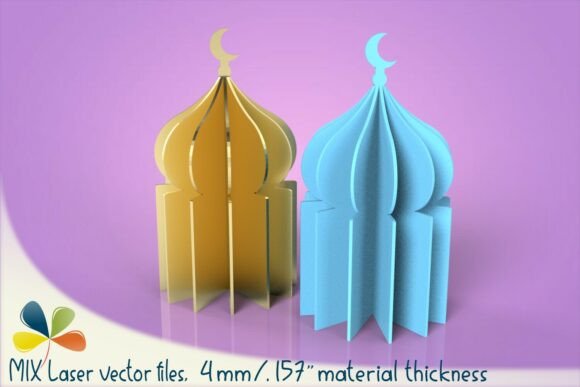
At its core, the Small 3D Mosque Laser Cut SVG 4mm is a parametric design engineered for efficiency and elegance. The structure relies on six distinct pieces that interlock without the need for glue or external fasteners. This "friction-fit" assembly method is a hallmark of high-quality laser cut designs, allowing for a clean finish that highlights the natural grain or color of the chosen material. The dimensions are carefully calibrated to 100×190 mm (approximately 4×7.5 inches), making it a compact yet visually impactful object suitable for various display settings.
The choice of 4mm thickness is not arbitrary. In the world of laser cutting, material thickness dictates the strength of the joints and the overall stability of the final model. Thinner materials, such as 2mm or 3mm, might lack the rigidity needed to support the vertical elements of a mosque dome or minaret when assembled in a standing position. Conversely, thicker materials can obscure fine details and require significantly longer cutting times. The 4mm specification strikes an optimal balance, providing enough surface area for the interlocking tabs to grip securely while remaining thin enough to preserve the intricate geometric patterns typical of Islamic architecture.
File Formats and Technical Specifications
For professionals and enthusiasts alike, the versatility of the file formats provided is a critical component of the workflow. The package typically includes SVG, PDF, AI, DXF, and CDR files. Each format serves a specific purpose within the ecosystem of digital manufacturing:
- SVG (Scalable Vector Graphics): Ideal for web use and compatible with most modern vector editing software like Adobe Illustrator, CorelDRAW, and Inkscape. It ensures that the design remains crisp at any scale.
- DXF (Drawing Exchange Format): The industry standard for CAD software and many laser cutter control systems. It strips away formatting data, leaving only the essential vector paths needed for precise cutting.
- AI and CDR: Native formats for Adobe Illustrator and CorelDRAW respectively, allowing users to easily modify colors, line weights, or even tweak the geometry before sending the job to the machine.
- PDF: A universal format that preserves the layout and can be opened by almost any device, useful for previewing the design or printing templates for manual cutting if necessary.
This multi-format approach ensures that regardless of the user's preferred software stack or the specific requirements of their laser engraver, the Small 3D Mosque Laser Cut SVG 4mm remains accessible and functional. It removes technical barriers, allowing the focus to remain on the creative process rather than file compatibility issues.
Material Selection and Preparation
One of the most common challenges for beginners in laser cutting is selecting the appropriate substrate. Since this is a digital product only, no physical item is shipped; the buyer receives the instructions and the path, but the creation relies entirely on their local resources. Therefore, understanding material compatibility is paramount. The design explicitly requires a material thickness of 4mm (0.16 inches). Using a material that deviates from this specification can lead to assembly failure, where tabs are too loose or slots are too tight.
Basswood is often the preferred choice for this type of project due to its fine grain, light color, and excellent burn characteristics. It cuts cleanly with minimal charring, which is essential for maintaining the delicate lines of the mosque design. Plywood, particularly birch plywood, offers greater durability and a contrasting edge grain that adds visual depth to the finished piece. For those seeking a more premium look, acrylic or MDF can be used, though they require different power and speed settings on the laser machine to prevent melting or excessive smoke.
Before initiating the cut, it is crucial to inspect the material for warping or knots. Even minor imperfections can cause the laser head to misalign or result in uneven edges, compromising the fit of the interlocking pieces. Properly securing the material on the bed and ensuring the focal point of the laser lens is set correctly for the 4mm height will yield the sharpest possible results. Attention to these preparatory steps distinguishes a professional-grade outcome from a rough prototype.
Applications in Spiritual and Cultural Decor
The primary application of this design lies in its ability to serve as a focal point for spiritual reflection and cultural celebration. During the holy month of Ramadan, homes and community centers often seek decor that reflects the sanctity of the season. A small, handcrafted 3D mosque model serves as a beautiful reminder of the Ummah and the importance of prayer. Its compact size makes it perfect for placement on bookshelves, mantelpieces, or dedicated gift tables where space may be limited but visual impact is desired.
Beyond personal decoration, this design holds significant value for educators and event planners. In educational settings, teachers can use the model to discuss Islamic architecture, geometry, and history. The interlocking nature of the pieces provides a hands-on lesson in engineering and spatial reasoning for students. For event organizers planning Eid gatherings or cultural exhibitions, these models can be produced in bulk to serve as centerpieces or unique party favors. Because the design is digital, it can be replicated infinitely, allowing for consistent branding or thematic consistency across large events.
The versatility of the design also extends to commercial applications. Small business owners specializing in handmade goods or Islamic gifts can incorporate this model into their product lines. By sourcing high-quality wood and adding finishing touches like gold leaf accents or LED lighting inside the structure, a simple laser-cut file can be transformed into a high-value artisanal product. The "handmade spiritual charm" mentioned in the design description is not just a marketing phrase; it is the tangible result of combining digital precision with human creativity.
Workflow Optimization for Makers
Integrating the Small 3D Mosque Laser Cut SVG 4mm into a production workflow requires a strategic approach to maximize efficiency. For hobbyists producing a single piece, the process is straightforward: download, load, cut, and assemble. However, for those looking to produce multiple units, nesting the design on the material sheet becomes essential. Nesting involves arranging the six pieces as closely as possible to minimize waste, thereby reducing material costs and cutting time.
Software tools like LightBurn, RDWorks, or AutoCAD allow users to optimize the layout automatically. Once the layout is finalized, test cuts should always be performed on scrap material. This step verifies that the power, speed, and frequency settings are correct for the specific batch of wood or acrylic being used. Wood density can vary, and a setting that works perfectly on one sheet may scorch or fail to penetrate another.
Assembly is the final stage where patience pays off. The six pieces must be aligned carefully. Because the design relies on friction, forcing the pieces together can snap the delicate tabs. A gentle tapping motion, perhaps using a soft mallet or simply finger pressure, usually suffices. If the fit is too tight, a slight sanding of the tab ends can improve the assembly experience without compromising the structural integrity. This tactile interaction with the material is what gives the final product its unique character, distinguishing it from plastic injection-molded alternatives.
Considerations for Long-Term Durability
While the initial creation of the model is exciting, considering its longevity is equally important. Laser-cut wood is susceptible to environmental factors such as humidity and direct sunlight. Over time, exposure to UV rays can cause the wood to fade, and fluctuating humidity levels can cause the wood to expand or contract, potentially loosening the interlocking joints.
To mitigate these risks, applying a protective finish is highly recommended. Clear matte varnish, polyurethane, or even a natural oil finish like tung oil can seal the wood, enhancing its grain and protecting it from moisture. For models intended for outdoor display or high-traffic areas, a more robust sealant may be necessary. Additionally, storing the unassembled pieces in a climate-controlled environment until they are ready for assembly can prevent warping before the project even begins.
Understanding these maintenance requirements ensures that the Small 3D Mosque Laser Cut SVG 4mm remains a cherished item for years to come. It transforms the project from a temporary craft into a lasting heirloom, capable of being passed down through generations or displayed permanently in a place of worship or study.
The Future of Customized Religious Art
The popularity of digital files like the Small 3D Mosque Laser Cut SVG 4mm signals a broader shift in how religious and cultural art is consumed and created. We are moving away from a consumer model where individuals buy finished products toward a creator economy where individuals possess the tools to make their own meaningful objects. This democratization of design empowers communities to personalize their environments in ways that reflect their specific tastes and traditions.
As laser cutting technology becomes more affordable and accessible, we can expect to see an explosion of similar designs tailored to various cultures and faiths. The principles demonstrated here—precision, modularity, and respect for material properties—will continue to define the next generation of digital craftsmanship. Whether used for personal devotion, educational purposes, or commercial enterprise, this small 3D mosque model stands as a testament to the enduring beauty of traditional forms reimagined through modern technology.
Ultimately, the value of this digital asset lies not just in the file itself, but in the potential it unlocks for the maker. It invites engagement, encourages learning, and facilitates the creation of something beautiful from nothing more than a digital instruction and a sheet of wood. In a world increasingly dominated by the virtual, the ability to create a tangible, touchable representation of faith and culture offers a profound sense of connection and satisfaction.