3D Gothic Forest Dreamcatcher Laser File: A Technical Evaluation for Makers
In the realm of digital fabrication, the intersection of aesthetic complexity and manufacturing reliability often determines the success of a project. The 3D Gothic Forest Dreamcatcher Laser File represents a specific niche within this landscape, offering a design that merges gothic architectural motifs with traditional dreamcatcher symbolism. For laser cutting professionals and hobbyists evaluating their next production run, understanding the technical specifications and practical applications of this file is essential. This evaluation examines the design's engineering, compares it to alternative styles, and outlines the scenarios where it provides the most value.
Design Philosophy and Architectural Distinctiveness
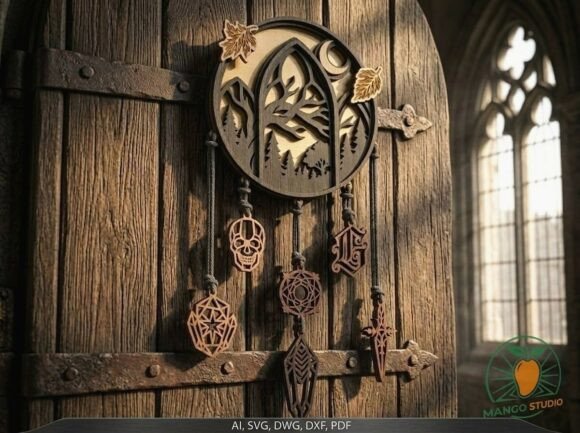
The primary distinction of the 3D Gothic Forest Dreamcatcher Laser File lies in its departure from organic, free-form dreamcatcher designs. While many standard templates rely on flowing vines or simple geometric patterns, this file incorporates robust architectural cathedral lines. These elements introduce a sense of verticality and structural integrity that mimics stone masonry, translated into wood or acrylic layers.
This approach creates a unique visual hierarchy. The design utilizes flawless continuous geometry to ensure that every cut path is logical and efficient. Unlike designs that rely on intricate micro-details which can lead to burning or breakage during the cutting process, this file prioritizes clean nodes and perfect symmetry. The result is a pattern that not only looks complex but is engineered for smooth cutting. The inclusion of unique drop pendants adds a dynamic element, allowing the finished piece to interact with light and shadow in a way that flat, single-layer designs cannot achieve.
Technical Specifications and Material Compatibility
When evaluating a vector file for production, the technical metadata is as important as the visual output. The 3D Gothic Forest Dreamcatcher Laser File is optimized with precise dimensions and tolerances that reduce post-processing time. The main circular frame is calibrated at exactly 290 x 298.5 mm, including mounting loops. This specific sizing ensures compatibility with standard medium-sized laser beds without requiring excessive nesting adjustments.
A critical aspect of the engineering is the hole diameter specification. The loops are designed with 6.5 mm openings. This dimension is not arbitrary; it is calculated to accommodate heavy-duty 6 mm ropes or leather cords with a slight clearance for ease of assembly. Many generic files feature holes that are either too tight, causing friction burns when threading, or too loose, resulting in an unstable final product. This precision suggests the file was created with assembly workflows in mind, rather than just visual representation.
The file is provided in a comprehensive suite of formats, including AI (Adobe Illustrator), SVG (Scalable Vector Graphics), DWG (AutoCAD Drawing Database), DXF (Drawing Exchange Format), and PDF. This versatility allows users to integrate the design into various software ecosystems. Whether a user operates a desktop cutter controlled by LightBurn or a larger industrial CNC router managed through CAD software, the availability of these formats eliminates the need for third-party conversion tools, which can sometimes introduce errors into the geometry.
Comparative Analysis: Gothic vs. Traditional Styles
To make an informed decision, it is necessary to compare the 3D Gothic Forest Dreamcatcher Laser File against other prevalent styles in the market. Traditional dreamcatcher designs often prioritize minimalism and softness, using thin lines and delicate webbing. While aesthetically pleasing, these designs can be fragile and may require extensive sanding to remove burn marks caused by slow cutting speeds on fine details.
In contrast, the gothic style emphasizes bold lines and layered depth. The tradeoff here is material usage; a multilayered gothic design typically consumes more raw material than a single-layer traditional design. However, the return on investment comes from the perceived value of the finished product. The 3D effect achieved through layering creates a premium look that commands a higher price point in retail environments. Furthermore, the "zero micro-details" engineering of this specific file reduces the risk of failure compared to highly intricate alternatives that might snap under tension or fail to cut cleanly on lower-wattage machines.
Another comparison involves the target demographic. Traditional designs often appeal to bohemian or nature-focused decor markets. The gothic forest theme, with its cathedral lines and dark aesthetic, targets a different segment—those interested in fantasy, horror, or vintage industrial decor. Choosing between these options depends heavily on the intended end-user and the existing inventory of the maker.
Material Selection and Finish Considerations
The final appearance of any laser-cut product is heavily dependent on the substrate chosen. For the 3D Gothic Forest Dreamcatcher Laser File, the choice of plywood or hardwood significantly impacts the outcome. The design's reliance on layering means that edge quality is paramount. Materials with consistent grain and low resin content are recommended to prevent warping during the cutting process.
A key recommendation for maximizing the design's potential is the use of a contrasting multilayer color scheme. By alternating between light and dark wood stains, or using different colored acrylics for each layer, makers can enhance the 3D depth and shadow effect inherent in the architecture of the file. If all layers are made from the same material with the same finish, the distinct architectural lines may blend together, diminishing the gothic impact. Therefore, while the file itself is a high-quality asset, its full realization requires a strategic approach to finishing techniques such as staining, painting, or edge sealing.
Scalability and Production Flexibility
One of the significant advantages of this digital asset is its scalability. The vector-based nature of the file allows it to be resized without loss of quality. While the default optimization is set for a 290 x 298.5 mm footprint, the geometry holds up well when scaled up for larger laser beds or even CNC routers. This flexibility makes it suitable for various business models, from small-scale boutique crafting to larger batch production runs.
However, scaling does come with considerations. Increasing the size of the design will proportionally increase the kerf (the width of material removed by the laser) and the total cutting time. Users must recalculate power and speed settings when moving away from the tested dimensions to maintain the "clean nodes" and "flawless continuous geometry" promised by the original engineering. Additionally, larger pieces may require different mounting strategies to prevent vibration or movement during the cutting process.
Decision Factors: When to Choose This Design
The 3D Gothic Forest Dreamcatcher Laser File is best suited for makers who prioritize structural integrity and a high-end aesthetic over rapid, low-cost production. It is an ideal choice for businesses looking to expand their portfolio into premium home decor items that stand out on shelves. The design is particularly effective for creators who have access to materials capable of showcasing deep shadows and contrast, such as walnut, maple, or multi-colored acrylics.
Conversely, this file may not be the right fit for projects requiring extreme speed or minimal material cost. If a business model relies on producing hundreds of units per day with the cheapest possible plywood, the multilayered nature of this design might introduce bottlenecks in assembly and finishing. Similarly, if the target audience prefers rustic, hand-carved looks over precise, architectural geometry, a less structured design might align better with customer expectations.
Ultimately, the value of this file lies in its balance between artistic ambition and manufacturing reality. By removing micro-details and optimizing node placement, it bridges the gap between a complex concept and a reliable production workflow. For those willing to invest time in material selection and finishing, the result is a product that demonstrates exceptional attention to detail and offers a competitive edge in the craft market.