Polyhedron Sphere Gift Box: A Practical Evaluation
In the competitive landscape of premium packaging, the difference between a standard box and a memorable brand experience often lies in structural innovation. The Polyhedron Sphere Gift Box represents a significant departure from traditional rectangular or cylindrical containers. This premium packaging template features a striking 3D polyhedron design, creating a unique spherical silhouette with multiple geometric facets. For professionals seeking to elevate their product presentation, understanding the mechanics, material requirements, and application scenarios of this specific design is essential before committing to production.
This article provides an objective analysis of the Polyhedron Sphere Gift Box, evaluating its technical specifications, manufacturing considerations, and suitability for various high-end markets. We will examine how the intricate structure functions in real-world applications and whether it aligns with the workflow of designers, small business owners, and marketing teams.
Structural Integrity and Design Specifications
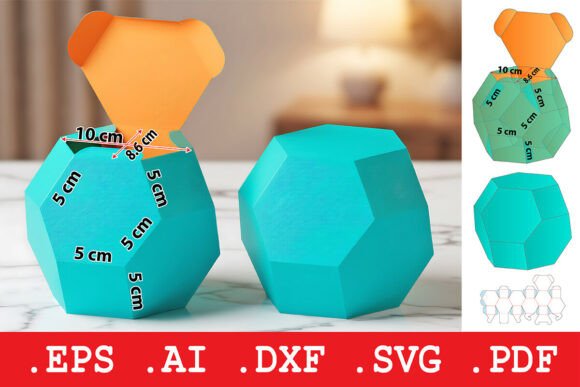
The defining characteristic of this packaging solution is its geometry. Unlike simple folding boxes, the Polyhedron Sphere Gift Box relies on a complex assembly of triangular or polygonal facets that converge to form a near-spherical shape. This intricate structure provides an opening of 10 x 8.6 cm, which serves as the primary access point for the contents. With individual facet edges measuring 5 cm, the design achieves a balance between visual complexity and structural stability.
From a materials engineering perspective, the template is specifically engineered for 180-350 gsm paper. This weight range is critical. Paper below 180 gsm may lack the necessary rigidity to maintain the sharp creases required for the polyhedral form, leading to a collapsed or misshapen final product. Conversely, paper exceeding 350 gsm can become difficult to fold along the precise lines without cracking the fibers, particularly at the tight angles where facets meet. Staying within this specified range ensures the box retains its spherical silhouette while providing sufficient durability for shipping and handling.
The geometric precision required here means that the design is not merely decorative; it is functional. The facets distribute stress evenly across the surface, making the box surprisingly robust for its size. However, this strength is contingent upon accurate cutting and scoring. Any deviation in the cut lines can compromise the alignment of the facets, rendering the assembly process frustrating and the final result unsightly.
Production Workflow and File Compatibility
One of the most practical aspects of the Polyhedron Sphere Gift Box is the versatility of its included file formats. The package includes .DXF, .SVG, .EPS, .PDF, and .AI files, catering to a wide spectrum of production methods ranging from industrial manufacturing to desktop crafting.
- .DXF Files: These are compatible with CNC and laser cutting hardware. For businesses utilizing automated machinery, the DXF format ensures that the vector paths are interpreted correctly by the machine's controller, allowing for rapid, high-volume production with minimal waste.
- .SVG Files: Scalable vector graphics are ideal for digital design and craft cutters like Cricut or Silhouette. This makes the design accessible to freelancers and small-scale creators who do not have access to industrial equipment but still require professional-grade output.
- .EPS and .AI Files: The inclusion of standard vector formats (.EPS) and the original Adobe Illustrator source file (.AI) allows for full customization. Designers can modify colors, add logos, adjust text, or alter specific facet dimensions without degrading image quality.
- .PDF Files: These serve as print-ready documents for manual cutting and viewing. They are essential for proofing the design before committing to expensive materials, ensuring that all measurements and alignments are correct.
This comprehensive suite of files significantly reduces the barrier to entry. Whether you are a large manufacturer looking to integrate this box into an automated line or a boutique jeweler assembling units by hand, the technical assets provided support your specific workflow. The ability to scale the vector data without loss of resolution is particularly valuable when adapting the design for different paper stocks or adding custom branding elements.
Market Applications and Brand Positioning
The aesthetic appeal of the Polyhedron Sphere Gift Box makes it highly suitable for luxury segments where unboxing is a key part of the customer journey. Its highly decorative design is perfect for luxury jewelry, premium chocolates, collectible ornaments, or high-end wedding favors. In these markets, the packaging is not just a container; it is an extension of the brand identity.
For jewelry retailers, the spherical shape mimics the organic forms often found in gemstones, creating a thematic resonance that enhances the perceived value of the item inside. The 10 x 8.6 cm opening is well-suited for necklaces, bracelets, or sets of earrings, offering enough space to display the product without excessive empty volume. Similarly, chocolatiers can leverage the geometric facets to create a sense of craftsmanship and exclusivity, distinguishing their products from mass-market confectionery.
Wedding planners and event coordinators also find significant value in this design. High-end wedding favors often require a level of sophistication that standard boxes cannot provide. The Polyhedron Sphere Gift Box offers an exceptional and memorable unboxing experience for boutique branding, turning a simple token of appreciation into a keepsake that guests are likely to retain rather than discard.
However, it is important to consider the context of use. While the design excels in static displays and gift-giving scenarios, its spherical nature may present challenges in dense stacking during logistics. Unlike flat boxes, spheres occupy more cubic volume relative to their internal capacity, potentially increasing shipping costs if not packed efficiently. Businesses must weigh the premium presentation against the logistical implications of non-standard shapes.
Usability and Assembly Considerations
While the final product is visually stunning, the assembly process requires patience and attention to detail. The intricate structure means that there are more tabs and slots to manage compared to a standard tuck-top box. For manual assembly, this can be time-consuming. It is recommended that businesses calculate the labor cost per unit carefully, especially if producing in low volumes.
For those using laser cutters, the thermal effect on the paper edge must be managed. Cutting through 350 gsm cardstock can sometimes leave slight charring or discoloration on the edges. Depending on the color of the paper, this might be visible on the finished box. Testing with scrap material is advisable to determine the optimal power and speed settings for the specific stock being used.
Furthermore, the flexibility of the design allows for creative customization, but it also introduces variables. If a designer chooses to alter the facet sizes or the overall diameter, they must ensure that the structural integrity remains intact. Changing the proportions could affect how the tabs interlock, potentially leading to a loose fit. The original template has been engineered for specific dimensions, and deviations should be made with a clear understanding of the underlying geometry.
Long-Term Value and Strategic Fit
Investing in a template like the Polyhedron Sphere Gift Box is a strategic decision that impacts brand perception. For entrepreneurs and marketers targeting the 20–50 demographic, particularly those in the lifestyle, fashion, and artisan sectors, the return on investment comes from enhanced customer loyalty and word-of-mouth promotion. A unique unboxing experience encourages social sharing, effectively turning customers into brand ambassadors.
The long-term value lies in the reusability of the asset. Because the files are scalable and editable, the same base design can be adapted for seasonal campaigns, limited editions, or different product lines without needing to commission new artwork from scratch. This consistency helps build brand recognition over time.
However, this solution is not a one-size-fits-all remedy. It is best suited for products with a higher price point where the packaging cost can be absorbed without eroding margins. For budget-conscious brands or items with very low unit prices, the cost of specialized paper and the labor involved in assembly may outweigh the benefits. Additionally, the design assumes a certain level of dexterity from the assembler; if the target audience for the product involves self-assembly by the end-user (which is rare for this type of box), the complexity could be a deterrent.
In conclusion, the Polyhedron Sphere Gift Box is a powerful tool for elevating product presentation. Its combination of geometric elegance, robust file compatibility, and suitability for luxury goods makes it a compelling option for professionals looking to differentiate their brand. By understanding its material constraints, assembly requirements, and logistical implications, businesses can leverage this design to create a lasting impression that resonates with discerning consumers.