The Isometric Stack of Ballot Papers Casting: A Visual Metaphor for Democratic Direction
In the realm of modern graphic design, where visual communication must be both immediate and profound, few concepts capture the complexity of civic duty as effectively as the Isometric Stack of Ballot Papers Casting. This specific illustration is not merely a collection of geometric shapes; it is a carefully constructed narrative device that signifies the marching mark of democracy. By transforming the mundane act of voting into a dynamic, three-dimensional journey, this design speaks to professionals, creators, and marketers who are constantly seeking fresh ways to visualize abstract societal concepts.
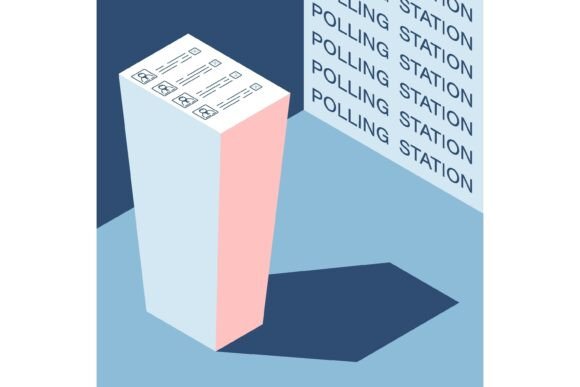
The image showcases a neatly arranged towering stack of ballot papers that intriguingly cast an arrow-shaped shadow, guiding viewers toward the polling station. Crafted as a 3D vector design, this cartoon image is chock-full of isometric details that breathe realism into it. Set against a tranquil blue backdrop, this graphic speaks volumes about the democratic process in a crisp and visually compelling manner. For designers navigating the intersection of political symbolism and delightful whimsy, understanding the mechanics and implications of this visual trend is essential.
Deconstructing the Visual Narrative
To truly appreciate the impact of the Isometric Stack of Ballot Papers Casting, one must first understand the unique properties of isometric projection itself. Unlike traditional perspective drawing, which relies on vanishing points to create depth, isometric art maintains parallel lines. This technique allows for a comprehensive view of an object from multiple angles simultaneously without distortion. When applied to a stack of ballots, the result is a structure that feels tangible, weighty, and organized.
The core genius of this illustration lies in its use of light and shadow. The stack of papers represents the collective voice of the electorate—a physical accumulation of individual choices. However, the true focal point is the shadow. In most standard illustrations, shadows serve only to ground an object. Here, the shadow is repurposed as a directional tool. It forms a distinct arrow, pointing decisively toward the destination: the polling station. This subtle shift transforms a static pile of paper into a dynamic force of movement. It suggests that every vote cast adds momentum to the democratic machine, propelling society forward.
The Power of the Tranquil Blue Backdrop
Color psychology plays a pivotal role in how this message is received. The choice of a tranquil blue backdrop is deliberate and strategic. In the context of politics and governance, blue often symbolizes trust, stability, intelligence, and loyalty. By setting the vibrant, detailed isometric stack against this calm background, the design creates a sense of order amidst the potential chaos of election cycles. It reassures the viewer that the process, while complex, is grounded in reliability. This color palette makes the graphic versatile enough for corporate presentations, educational materials, and digital marketing campaigns alike.
Aligning with Contemporary Design Trends
The rise of the Isometric Stack of Ballot Papers Casting is not an isolated phenomenon; it is part of a broader shift in the creative industry toward "functional whimsy." Modern audiences, particularly in the digital space, are inundated with flat, two-dimensional graphics that often lack emotional resonance. There is a growing demand for visuals that offer depth, texture, and a hint of storytelling without sacrificing clarity.
Professionals in the tech and startup sectors have long embraced isometric design because it mimics the user interface elements of software and mobile applications. It feels native to screens, yet it retains a hand-crafted charm. When this style is applied to civic themes, it bridges the gap between the digital-native generation and traditional institutions. It makes the concept of voting feel accessible, modern, and even playful, rather than bureaucratic or intimidating.
Furthermore, the trend reflects a desire for visual efficiency. In an era of short attention spans, a single image must convey a complex idea instantly. The arrow-shaped shadow does exactly that. It eliminates the need for explanatory text. A marketer looking to promote voter registration or a nonprofit aiming to highlight civic engagement can deploy this image knowing that the message—your vote leads somewhere—is understood immediately.
Why Marketers and Creators Are Paying Attention
As we move deeper into the digital age, the expectations for content quality are evolving. Stakeholders are no longer satisfied with generic stock photography or clip art. They seek assets that demonstrate thoughtfulness and conceptual depth. The Isometric Ballot Stack has garnered significant attention because it adeptly combines political symbolism with a dash of delightful whimsy. This combination is rare and highly valuable.
For entrepreneurs and freelancers, utilizing such imagery signals a high level of sophistication. It shows an understanding of how to manipulate visual language to influence perception. When a campaign uses this specific design, it suggests that the organization views democracy not just as a procedure, but as a journey. This narrative approach resonates deeply with consumers who value authenticity and purpose in the brands they support.
Moreover, the versatility of this 3D vector design cannot be overstated. Because it is crafted as a vector, it can be scaled infinitely without losing quality. It can be adapted for billboards, social media thumbnails, website headers, and printed brochures. The isometric nature of the design also allows for easy integration into larger infographics or data visualization projects, making it a staple asset for agencies working on public sector or non-profit accounts.
Changing Workflows and Consumer Expectations
The adoption of designs like the Isometric Stack of Ballot Papers Casting also reflects changing workflows in the creative industry. Designers are increasingly expected to be storytellers, not just decorators. The ability to embed a metaphor (the shadow arrow) directly into the geometry of the subject (the ballot stack) requires a higher level of conceptual planning. This shift demands tools and skills that prioritize spatial reasoning and symbolic logic.
From a consumer perspective, there is a growing preference for content that feels interactive and immersive. Even though the image is static, the isometric angle invites the eye to travel around the object, exploring the layers of the stack and following the path of the shadow. This micro-interaction keeps the viewer engaged longer than a flat icon would. In a market where engagement metrics drive success, this subtle increase in dwell time is a critical advantage.
Practical Applications in Modern Campaigns
How can professionals leverage this concept? Consider a digital agency tasked with creating a voter turnout campaign for a local municipality. Instead of using a generic photo of a ballot box, they could commission or license a variation of the Isometric Stack of Ballot Papers Casting. They might animate the shadow arrow to pulse gently, drawing the eye to a "Register Now" button. The visual continuity between the ballot stack and the call-to-action creates a seamless user experience.
Similarly, educational platforms teaching civics to younger generations can use this graphic to explain the flow of democracy. The stack represents the people, and the arrow represents the direction of their influence. It simplifies a complex system into a digestible visual metaphor. This approach aligns with the pedagogical trend of using gamified and stylized elements to teach serious subjects.
Even in corporate communications, where neutrality is key, this design offers a way to express support for democratic values without being overtly partisan. The focus remains on the process—the stacking of votes and the direction toward the station—rather than on any specific candidate or party. This makes it a safe yet powerful tool for internal newsletters or external CSR (Corporate Social Responsibility) reports.
Looking Forward: The Future of Civic Imagery
As technology advances, we can expect to see the principles behind the Isometric Stack of Ballot Papers Casting evolve further. Augmented reality (AR) and virtual reality (VR) environments will likely adopt these isometric structures to create immersive civic experiences. Imagine a user scanning a poster and seeing the stack of ballots come to life, with the shadow arrow physically moving across their floor to guide them to a nearby polling location. The foundational design remains relevant, but the medium expands.
Ultimately, the enduring appeal of this illustration lies in its ability to humanize the abstract. Democracy is often discussed in terms of laws, policies, and statistics. The Isometric Ballot Stack reminds us that at its heart, democracy is about people—stacking their voices together to create a clear path forward. For creators and professionals, embracing such imagery is not just a stylistic choice; it is a commitment to communicating the importance of civic participation with clarity, beauty, and purpose.
In a world saturated with noise, a well-crafted visual metaphor cuts through the clutter. The Isometric Stack of Ballot Papers Casting stands as a testament to the power of design to inspire action. It proves that when we look closely at the symbols we create, we can find new ways to understand and engage with the fundamental processes that shape our societies. As we continue to navigate the complexities of the modern world, these visual anchors will remain essential guides for both creators and the communities they serve.