Mastering Polymer Clay Art with the Rose Flower Clay Cutter STL
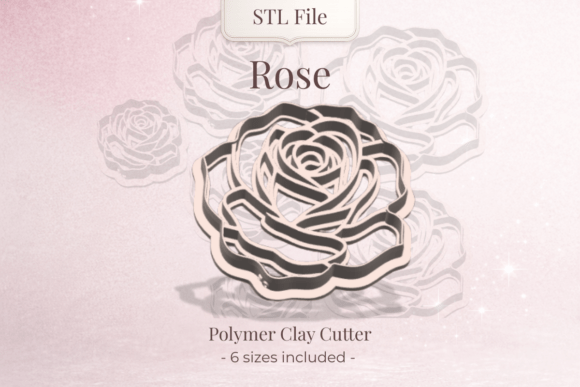
The intersection of digital design and traditional craftsmanship has opened new doors for artists, particularly in the realm of polymer clay jewelry making. Among the most transformative tools to emerge from this fusion is the Clay Cutter STL – Rose Flower. This digital file represents more than just a 3D model; it is a gateway to creating consistent, professional-grade floral elements without the need for expensive, mass-produced metal cutters. Whether you are a hobbyist looking to expand your creative toolkit or a seasoned jewelry maker seeking efficiency, understanding how to utilize this resource can significantly elevate your work.
The Evolution of Clay Cutting: From Metal to Digital
For decades, polymer clay artists relied on pre-made metal cutters purchased from craft stores. While these tools were effective, they came with limitations: fixed sizes, high costs for large collections, and often, designs that lacked unique character. The introduction of 3D printing technology changed the landscape entirely. Now, artists can download an STL file—a standard file format for 3D printing—and produce custom cutters tailored to their specific needs.
The Rose flower clay cutter, created by S.I. Originals, exemplifies this shift. It allows creators to print their own tools using a standard FDM (Fused Deposition Modeling) 3D printer. This democratization of tool-making means that the barrier to entry for high-quality jewelry production is lower than ever. Instead of waiting for shipping or paying premium prices for a single size, you can print multiple variations instantly, right from your home studio.
Why the Rose Design Stands Out
The rose is perhaps the most iconic symbol in floral jewelry, representing elegance, romance, and timeless beauty. However, cutting a realistic rose shape from polymer clay requires precision. A poorly designed cutter can result in jagged edges, uneven petals, or a shape that loses its definition during baking. The Clay Cutter STL – Rose Flower addresses these challenges directly.
This specific design features a sharp cutting edge and a sturdy wall. These structural elements are critical. The sharp edge ensures that the clay is sliced cleanly rather than compressed or torn, which is essential for maintaining the delicate details of the rose petals. Meanwhile, the sturdy walls prevent the plastic cutter from bending or breaking under the pressure required to cut through dense polymer clay blocks. This balance of flexibility and rigidity makes it perfect for both beginners who might apply too much force and experts who require speed and consistency.
Understanding the Product: What You Receive
When you acquire the Rose Flower Clay Cutter STL, you are not just buying a single tool; you are gaining a versatile set of resources. The download includes one comprehensive STL file containing six distinct cutter sizes:
- 25 mm: Ideal for tiny accent pieces or miniature earrings.
- 30 mm: Perfect for stud earrings or small pendants.
- 35 mm: A versatile mid-size for standard jewelry components.
- 40 mm: Great for statement pieces or larger brooches.
- 45 mm: Suited for bold floral arrangements.
- 50 mm: Excellent for large decorative elements or cake toppers.
Each of these cutters is engineered with a precise 0.4 mm cutting edge. This specification is not arbitrary; it is optimized to provide clean cuts while remaining durable enough to withstand repeated use. Having all six sizes in a single file saves storage space and simplifies your workflow, allowing you to create matching sets of earrings, necklaces, and bracelets with varying scales but identical design integrity.
Practical Application: Printing Your Own Cutters
One of the most exciting aspects of this product is the ability to manufacture your own tools. The design is specifically optimized for FDM 3D printers, which are widely available and relatively affordable. To get the best results, adhering to recommended print settings is crucial.
Recommended Print Settings
To ensure your rose cutter performs as intended, consider the following guidelines:
- Material: Use PLA (Polylactic Acid) or PETG. PLA is generally easier to print and provides a smooth finish, while PETG offers slightly higher durability if you plan on heavy industrial use.
- Infill Density: For a clay cutter, a higher infill percentage (around 60% to 100%) is recommended. This ensures the walls are solid and will not flex when pressing into hard clay.
- Wall Thickness: Ensure your slicer software generates at least two or three perimeters to reinforce the structure.
- Layer Height: A standard layer height of 0.2 mm usually provides a good balance between print speed and surface smoothness.
Once printed, you may find that the surface of the cutter has slight layer lines. While these do not affect the cutting performance, sanding the exterior lightly can improve the grip and aesthetics of the tool. Remember, the interior cutting edge must remain sharp, so avoid sanding the rim where it contacts the clay.
Integrating the Rose Cutter into Your Creative Workflow
How does this tool fit into modern creativity? In today's fast-paced world, artists and small business owners need efficiency without sacrificing quality. The polymer clay rose cutter streamlines the jewelry-making process. Instead of hand-sculpting every petal—a time-consuming task prone to inconsistency—you can press the cutter into a slab of conditioned clay to produce dozens of identical roses in minutes.
This consistency is vital for commercial success. If you run an Etsy shop or sell at craft fairs, customers expect uniformity in your products. Using a standardized cutter ensures that every pair of earrings looks exactly like the last, building trust and brand recognition. Furthermore, the ability to scale up production quickly allows you to meet demand during holiday seasons or special promotions.
Beyond Earrings: Versatile Uses
While the primary application mentioned is for polymer clay earrings, the utility of the rose cutter extends far beyond simple jewelry. Consider these applications:
- Cake Decorating: Cut out shapes for edible clay or fondant decorations.
- Scrapbooking: Create dimensional floral embellishments for cards and albums.
- Home Decor: Design intricate wall art or decorative tiles.
- Education: Use in art classes to teach students about symmetry, geometry, and material properties.
The versatility of the design encourages experimentation. Artists can layer different colored clays before cutting to create marbled effects, or they can combine the rose cutters with other shapes to build complex floral arrangements.
Addressing Common Misconceptions
As with any new technology, there are misunderstandings regarding 3D-printed tools. One common assumption is that plastic cutters cannot be as sharp or durable as metal ones. While it is true that metal lasts longer under extreme industrial stress, for the typical polymer clay artist, a well-printed PLA cutter is more than sufficient. The key lies in the design optimization. The S.I. Originals design accounts for the physics of cutting, ensuring the edge remains effective even after hundreds of uses.
Another misconception is that 3D printing is difficult or requires expensive equipment. In reality, entry-level FDM printers are accessible to most households, and the learning curve for slicing and printing a simple object like a clay cutter is minimal. With the right STL file, the process becomes as easy as pressing "print" and letting the machine do the work.
Conclusion: Empowering Creativity Through Technology
The Clay Cutter STL – Rose Flower represents a significant step forward for the polymer clay community. By combining the aesthetic appeal of a classic rose with the practical benefits of digital manufacturing, it empowers artists to create with greater freedom and efficiency. Whether you are designing elegant floral jewelry, teaching art, or simply exploring a new hobby, this tool offers a reliable solution for achieving clean, precise, and beautiful results.
Embracing such innovations allows creators to focus less on the mechanics of tool production and more on the art itself. As 3D printing continues to evolve, we can expect even more sophisticated designs that further blur the line between digital files and physical masterpieces. For now, the rose flower cutter stands as a testament to what is possible when technology meets tradition, inviting everyone to carve their own path in the world of polymer clay art.