Clay Cutter STL – Hibiscus Flower: A Practical Evaluation for Polymer Clay Artists
For polymer clay artists and jewelry makers, the ability to produce consistent, intricate shapes is often the difference between a hobbyist project and a professional-grade collection. The Clay Cutter STL – Hibiscus Flower represents a specific approach to this challenge, offering a digital solution that bridges the gap between traditional metal cutters and modern 3D printing technology. Designed by S.I. Originals, this file allows creators to manufacture their own hibiscus-shaped cutters using standard FDM 3D printers. While it may appear simple at first glance, understanding its structural design, material compatibility, and comparative advantages over other tools is essential for determining if it fits your specific workflow.
Understanding the Design and Functionality
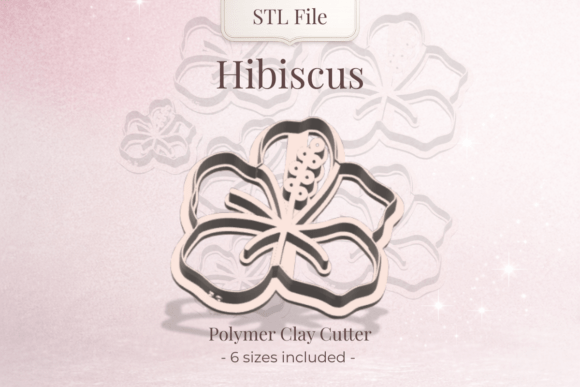
The core value of the Clay Cutter STL – Hibiscus Flower lies in its optimization for additive manufacturing. Unlike generic flower templates found online, this design incorporates a specific geometry intended to withstand the pressure required to slice through polymer clay. The model features a sturdy wall structure that prevents the cutter from bending or deforming during use, a common issue with poorly designed plastic molds. Furthermore, the inclusion of a precise 0.4 mm cutting edge is a critical detail. This thin profile ensures that the tool slices cleanly rather than crushing the clay, which preserves the integrity of the floral details.
One of the most practical aspects of this resource is the variety it offers within a single download. The package includes six distinct sizes ranging from 25 mm to 50 mm. This scalability is particularly useful for artists creating matching sets of earrings, where symmetry and proportion are vital. Whether you are crafting small stud earrings requiring the 25 mm version or larger statement pieces needing the 50 mm variant, having these options available eliminates the need to purchase multiple physical tools or search for separate files.
Comparison with Traditional Metal Cutters
When evaluating the Clay Cutter STL – Hibiscus Flower, it is necessary to compare it against the industry standard: stainless steel cutters. Metal cutters have long been the preferred choice for professionals due to their durability and razor-sharp edges. They offer an immediate, effortless cut with minimal resistance. However, they come with significant tradeoffs regarding cost and availability. Purchasing a set of high-quality metal hibiscus cutters can be expensive, and finding specific sizes or unique variations often requires waiting for shipping or accepting limited stock.
In contrast, the 3D-printed alternative offers immediate customization and lower upfront costs. Once you possess a printer, the marginal cost of producing a new cutter is negligible. The primary tradeoff is the cutting mechanism itself. While the 0.4 mm edge on the STL file is sharp enough for most soft clays, it may not perform as effortlessly as a honed steel blade when working with very hard or heavily conditioned clay. Users may find they need to apply slightly more downward pressure or rotate the cutter gently to achieve a clean release. For many hobbyists and semi-professionals, this minor increase in effort is a reasonable exchange for the flexibility and cost savings provided by the digital file.
Evaluation of Material Choices and Print Settings
The success of the Clay Cutter STL – Hibiscus Flower is heavily dependent on the materials and settings used during the printing process. The design is optimized for PLA (Polylactic Acid), which is widely available and easy to print. PLA offers sufficient rigidity for cutting soft polymer clays like Premo! or Sculpey III. However, for artists who work frequently or handle harder clays, exploring PETG or even Nylon might be beneficial. These materials offer higher impact resistance and thermal stability, potentially extending the lifespan of the cutter beyond what PLA can provide.
Print orientation also plays a crucial role in the final product's performance. To maximize the strength of the cutting edge and the overall wall integrity, the cutter should typically be printed flat on the build plate. Printing vertically can introduce layer lines along the cutting edge, which may result in jagged cuts or increased friction. Additionally, ensuring a high infill percentage—ideally 100% or near-solid—is recommended. A hollow or low-infill cutter will lack the structural density needed to push through dense clay without warping. By adhering to these technical parameters, users can ensure the printed tool performs reliably in a production environment.
Best-Fit Situations and Limitations
Determining when the Clay Cutter STL – Hibiscus Flower is the right choice requires an honest assessment of your current setup and goals. This resource is an excellent fit for creative studios that already own an FDM 3D printer and wish to expand their inventory without recurring expenses. It is also ideal for educators running workshops where students need to create specific shapes but cannot afford individual metal cutters. The ability to print multiple copies instantly makes it a scalable solution for teaching environments.
However, there are scenarios where this option may fall short. If you do not currently own a 3D printer, the investment required to acquire one may outweigh the cost of buying a few pre-made metal cutters. In such cases, purchasing physical tools remains the more practical route. Additionally, for artists who require extremely fine, lace-like detailing that demands the absolute sharpest possible edge, metal cutters remain superior. The resolution limits of FDM printing mean that while the hibiscus design is elegant, it may not capture microscopic details as crisply as a laser-cut or stamped metal die.
Strategic Decision Factors for Jewelry Makers
When deciding whether to integrate this digital file into your toolkit, consider the volume of your production and the variety of designs you intend to create. If you plan to make a large batch of hibiscus-themed jewelry, the ability to print multiple cutters of varying sizes simultaneously is a significant logistical advantage. You can keep several cutters on hand, allowing different team members to work on the same project without waiting for a single tool to become available.
Furthermore, the nature of the Clay Cutter STL – Hibiscus Flower encourages experimentation. Because the file is digital, it is relatively easy to modify. Advanced users can adjust the thickness of the walls or alter the petal shapes slightly to create a unique variation that no mass-produced tool offers. This level of customization empowers artists to develop a signature style that distinguishes their brand in a crowded marketplace. Conversely, if your workflow relies on speed and you produce hundreds of identical items daily, the slight friction of a plastic cutter compared to metal might slow down your assembly line.
Conclusion on Utility and Value
The Clay Cutter STL – Hibiscus Flower serves as a versatile bridge between traditional crafting and digital fabrication. It does not aim to replace high-end metal tools entirely but rather offers a compelling alternative for those seeking cost-effective, customizable solutions. Its distinct features, including the range of sizes and the optimized cutting edge, make it a valuable asset for polymer clay enthusiasts and jewelry makers alike. By understanding the strengths and limitations of this format, creators can make informed decisions about how best to incorporate it into their artistic practice, balancing the convenience of 3D printing with the functional requirements of their specific projects.